Un p’tit air d’Ecosse en 2026
Quelques échos de cette soirée :
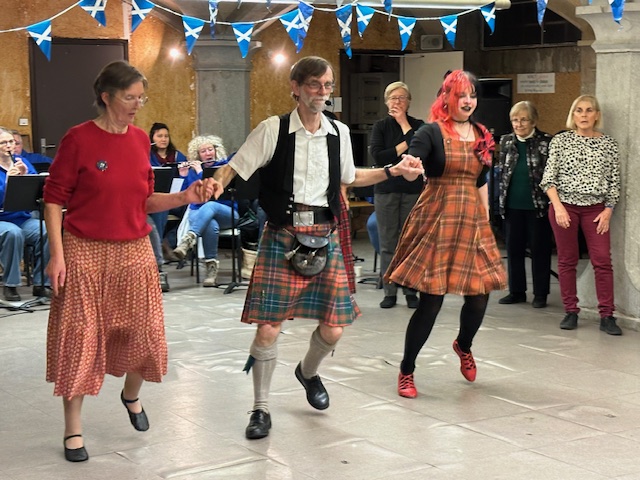
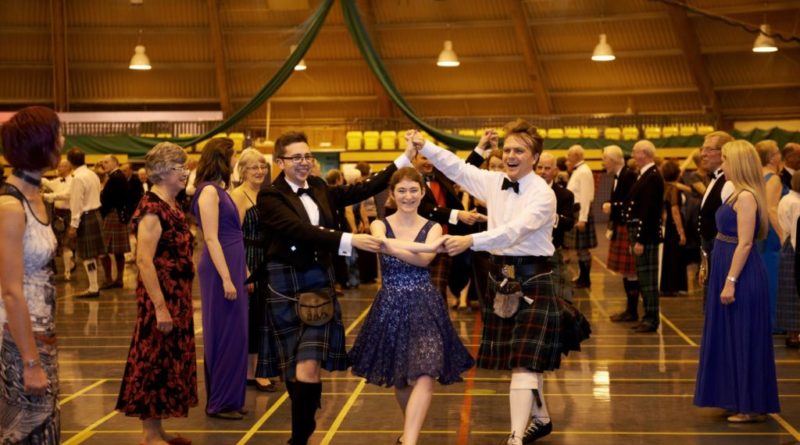
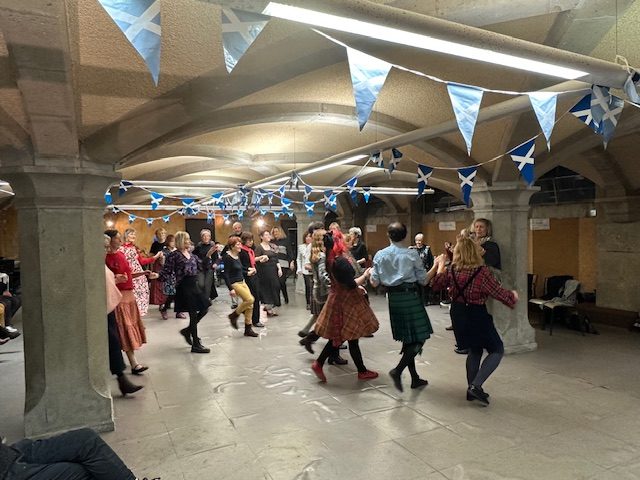
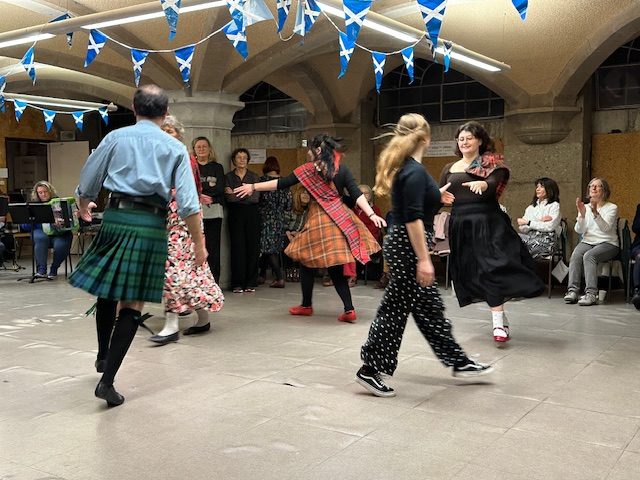
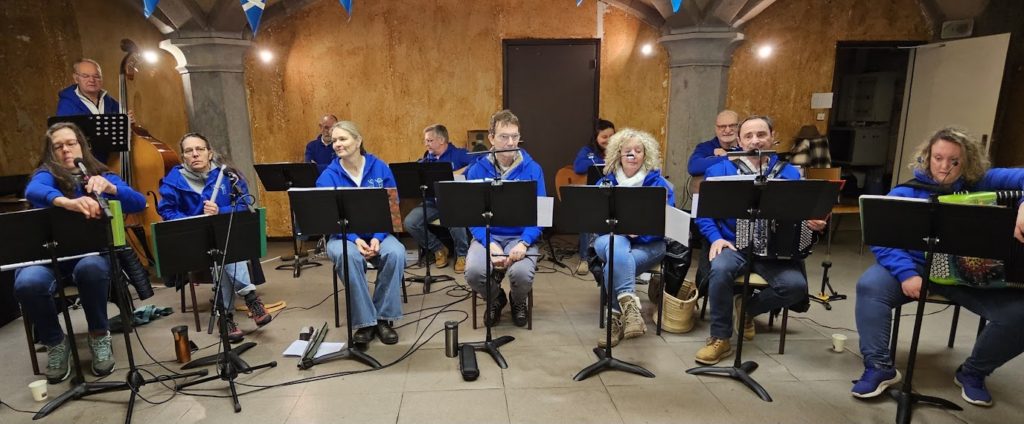
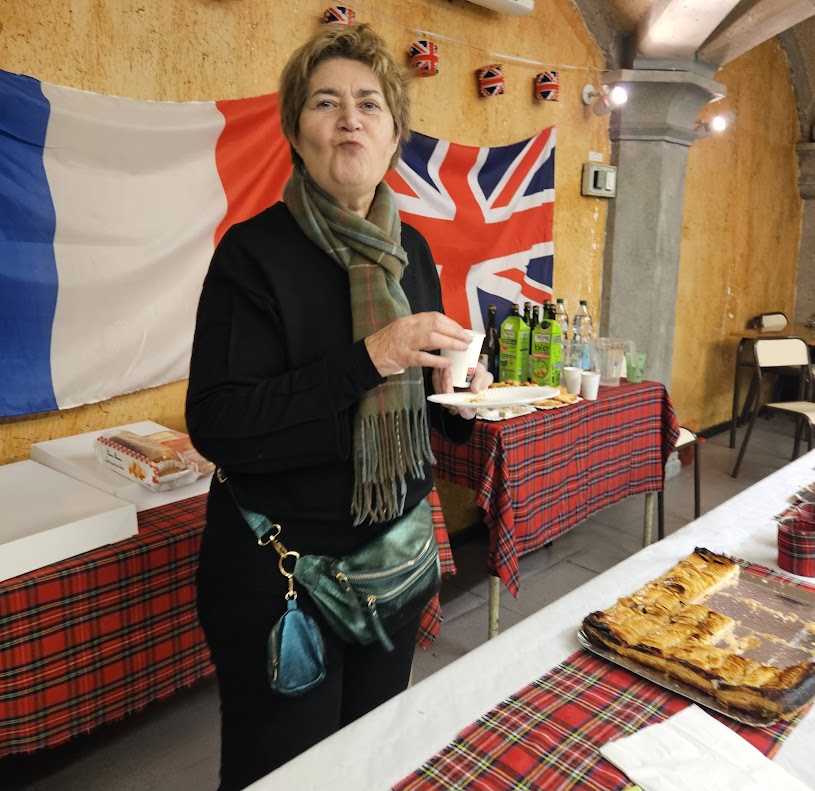
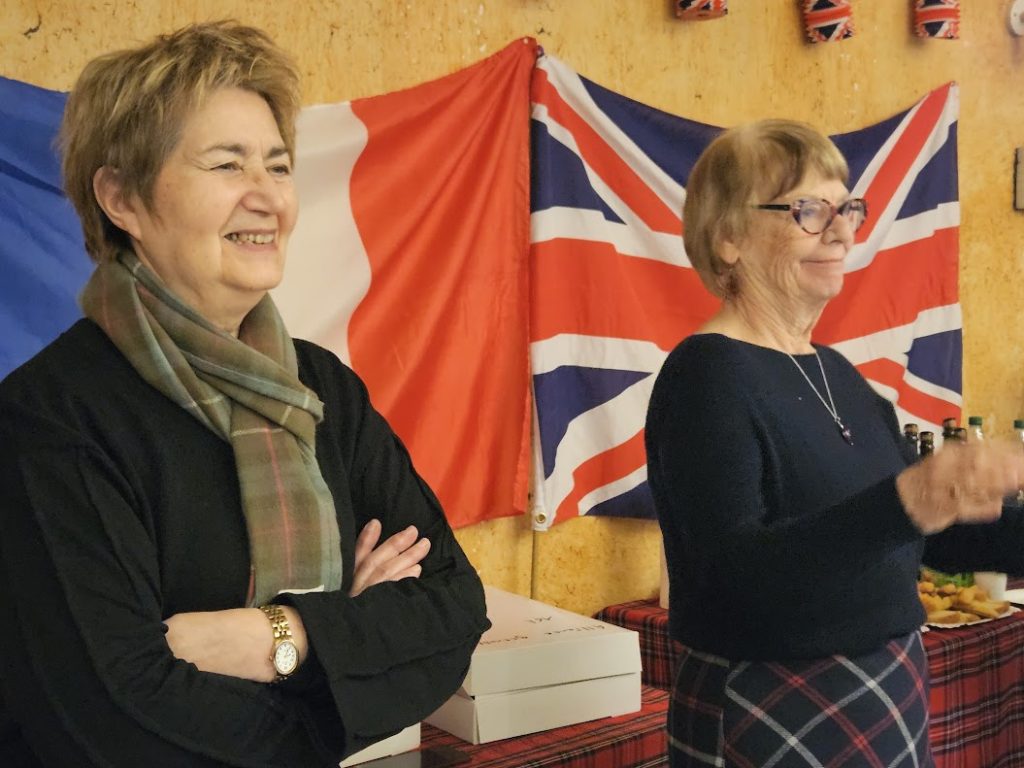
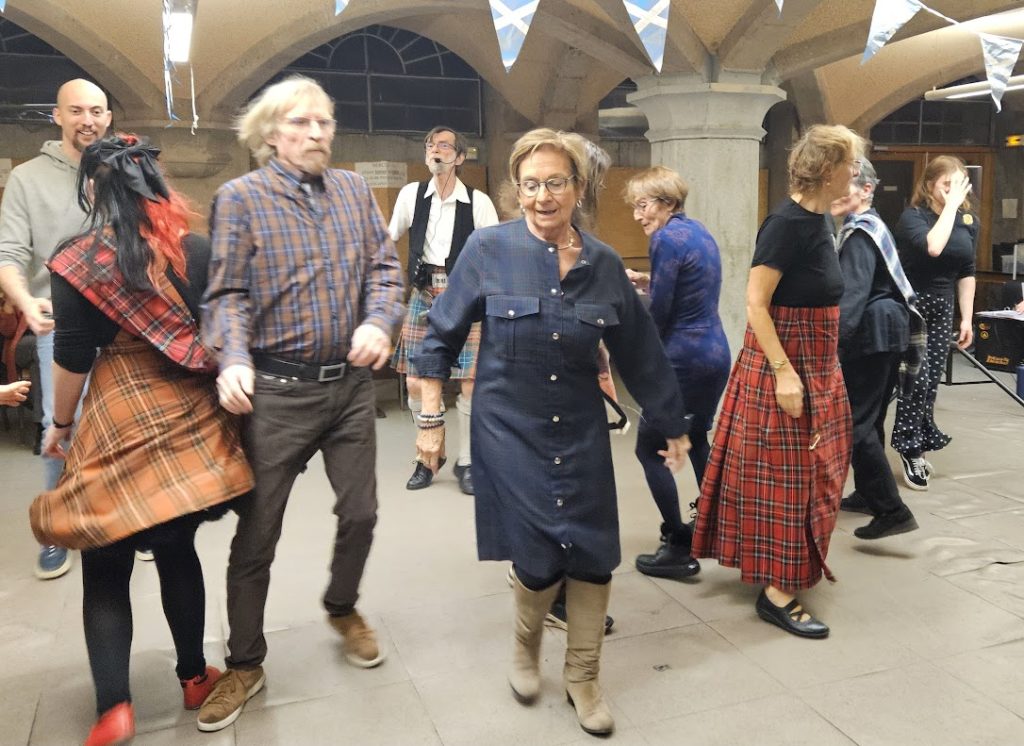
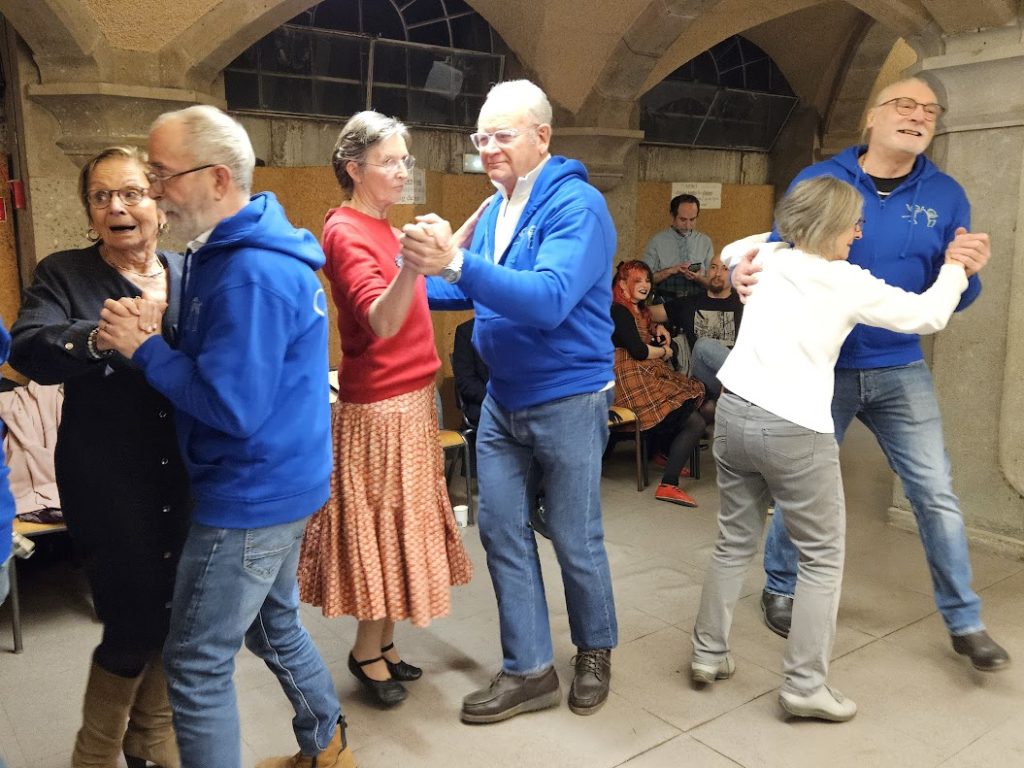
La soirée écossaise “Un p’tit air d’Ecosse” organisée par l’Alliance Grenoble-Oxford a maintenant pris ses marques en début d’année. Jacques Arnoux a toujours autant d’enthousiasme pour expliquer les différents pas de danse. Heureusement, des adhérents de son club de Danse Ecossaise de La Mure étaient là pour nous indiquer les bons mouvements et directions à prendre dans les différentes danses, Britannia twostep, Hedwig’s reel, Pudsey bear, Swedish masquerade, Canadian barn dance, Gypsy thread. Nous avons profité pleinement de la qualité de la douzaine de musiciens du groupe O’ Celtish de l’école de musique de Bourg d’Oisans. Véronica avait sorti de sa réserve un large choix de décorations écossaises (saltire, buntings, plaids, …) pour décorer la crypte et le stand de ravitaillement où il était indispensable de s’arrêter pour déguster tarte aux pommes , cidre et autres boissons, après toute l’énergie dépensée.
Nous avons quitté nos amis de Bourg d’Oisans et La Mure en leur souhaitant un bon retour alors que la neige s’était mise à tomber.
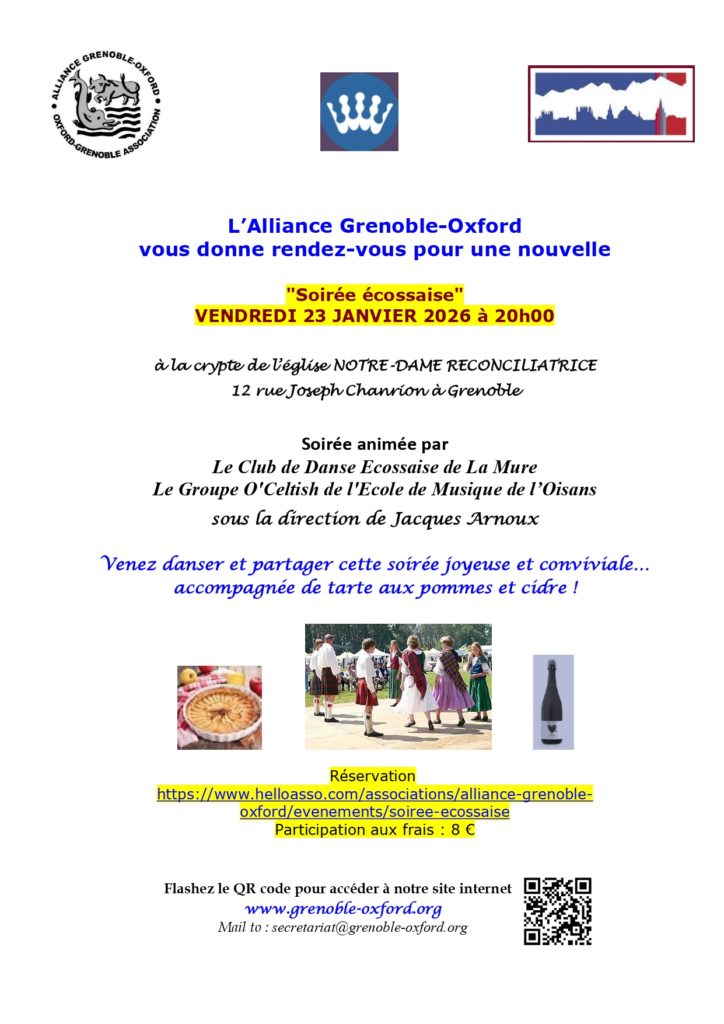
POUR RESERVER :
What is Burns Night and why do we celebrate it? The history behind the most important night in the Scottish calendar
What is Burns Night? Like Christmas, in simple terms Burns Night is a great big birthday bash for Scotland’s bard, Rabbie Burns.
Like Christmas, in simple terms Burns Night is a great big birthday bash. We celebrate it just one month later, a silver lining in deep winter on 25 January – the day Scotland’s pre-eminent poet, Robert ‘Rabbie’ Burns, was born – and it’s similarly indulgent and alcohol-infused.
So, what is Burns Night?

As well as being as indulgent and alcohol-infused, Burns Night is also ostentatiously Scottish and all the more rigorously traditional for it.
What happened at the first Burns Night supper?
Plus, its origins are more sober. The first Burns supper would have had quite a different atmosphere, not least because it was held on a warm midsummer’s night in July 1801. In a snug little cottage in Alloway – Burns’ family home – nine of Burns’ close friends gathered to mark the fifth anniversary of their friend’s death. The organiser of this commemorative dinner, Reverend Hamilton Paul, kept notes of the occasion, proof that – with the exception of a toasted sheep’s head, which we’re rather glad has been cut from the menu since – today’s line up of recitations and rituals has barely changed in 200 years.
Here is some Burns Night trivia about the Bard to impress your friends with over haggis and whisky.
Selkirk Grace
Traditionally, the host begins proceedings by saying Selkirk Grace, which was written by Burns and believed to have been first read by the Earl of Selkirk: “Some hae meat and canna eat/ And some wad eat that want it;/ But we hae meat, and we can eat,/ Sae let the Lord be thankit.”
Address to a Haggis
The haggis is then piped in on a silver platter (or some such showy crockery) and one chosen speaker, esteemed, Scottish or simply brave enough, will perform the Address to a Haggis with as much gusto as possible so as not to bore the guests with its eight verses of hard-to-understand Scots dialect.

Will there be a lecture on William Turner of Oxford soon?
If so, could we know the date, time and place please?